

FMN Original · Education
Beyond Space: NASA Reveals How Kennedy Space Center’s First Roller Coaster Will Inspire the Next Generation
FMN AUDIO
Listen to this article
Audio playback is not available in this browser.
Article audio is stopped.
In an exclusive Family Media News interview at IAAPA Expo 2026, Bob Cabana, the veteran NASA astronaut discusses AERO Test Lab, an immersive new attraction that will combine the excitement of flight with engineering, scientific discovery, and hands-on learning for families.
By Family Media News | November 2026
ORLANDO, Fla., Bob Cabana has traveled into space four times, commanded the Space Shuttle Endeavour, and helped begin the construction of the International Space Station. Yet when the former NASA astronaut speaks about his earliest passion, his thoughts return to something a little closer to Earth.
“My first love has always been aviation,” Cabana told Family Media News during an exclusive interview at IAAPA Expo 2026 in Orlando.
That personal connection makes Kennedy Space Center Visitor Complex's latest announcement particularly meaningful.
Scheduled to open in early 2028, AERO Test Lab will introduce the visitor complex's first-ever roller coaster. But unlike many attractions coming to Central Florida, its primary purpose extends beyond delivering thrills.
Developed in collaboration with German amusement ride manufacturer Maurer Rides, the attraction will invite visitors to experience the challenges of aeronautical research, placing them in the role of flight test engineers.
For families, it promises an unusual opportunity to discover the science behind something millions of people experience every day: flying.
Telling the Other Half of NASA's Story
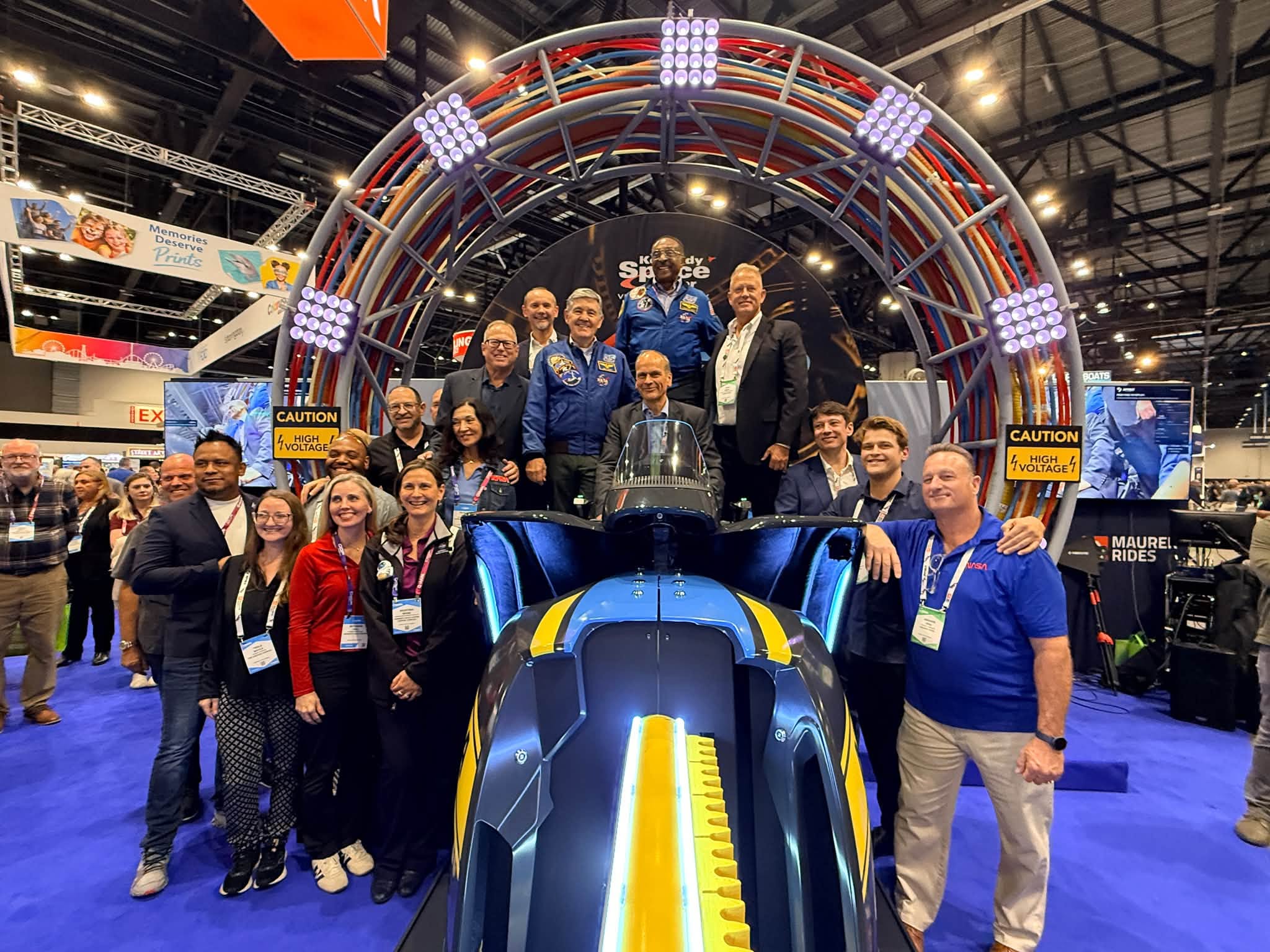
For generations of Americans, NASA has been synonymous with astronauts, moon landings, space shuttles, and the exploration of distant worlds.
But there is another dimension to the agency's mission that receives considerably less attention.
The first “A” in NASA stands for aeronautics, a field of research that has helped shape modern aviation and the aircraft passengers depend on today. During his conversation with Family Media News, Cabana emphasized that AERO Test Lab will help visitors understand those contributions.
“They're gonna tell the story of all the aviation innovations that NASA's brought to make flying safer and more efficient,” he explained.
It is a subject that connects NASA's scientific work to everyday family life. From aircraft efficiency to flight safety, aeronautical research has influenced technologies and practices that passengers may never notice when boarding a commercial airplane.
Cabana believes the new attraction will complement the visitor complex's existing educational offerings.
“We've told a great story about space exploration and how we go forward in space, both the history and the future,” he said. “Now we're gonna tell the story of aeronautics also.”
For an institution already home to the Space Shuttle Atlantis and exhibits celebrating America's journey to the Moon, the addition represents an expansion of its educational mission rather than a departure from it.
A Roller Coaster Where Riders Become Flight Test Engineers
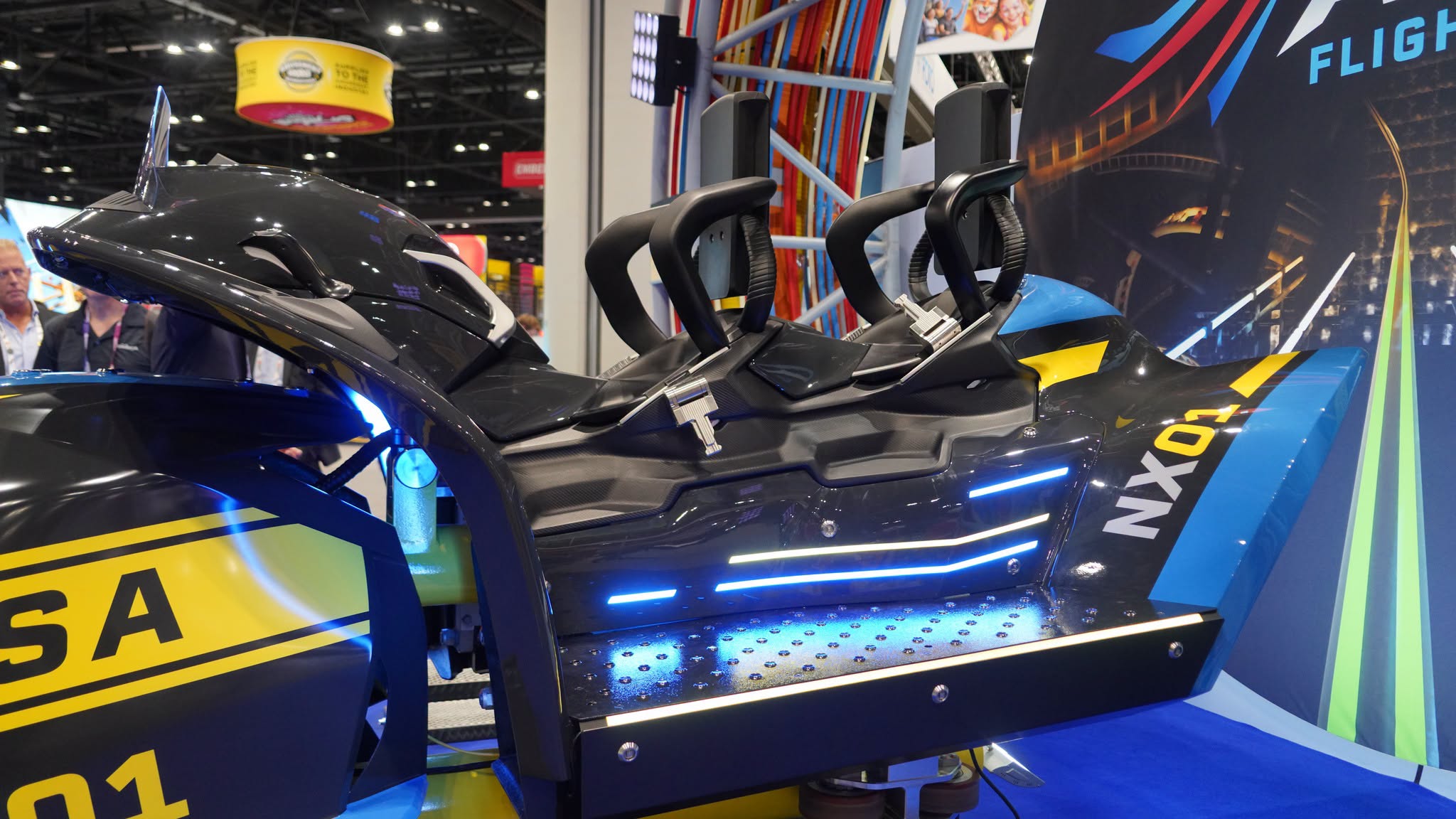
The vehicle features Maurer's SPIKE coaster technology, which introduces an interactive element not typically associated with conventional roller coasters.
Visitors will begin their adventure inside a recreated flight-testing facility, where they will receive mission instructions and participate in a simulated preflight inspection.
Once aboard, riders will navigate a course designed around different aeronautical challenges. They will have opportunities to influence their vehicle's speed, respond to instructions, and activate acceleration features at designated points.
Their performance will contribute to a final test score.
The attraction will introduce scientific concepts through simulated flight conditions, aircraft icing, lightning strikes, structural testing, and the behavior of air around moving objects.
Additional elements will include a wind tunnel and authentic artifacts associated with NASA's aviation research.
Cabana described the coaster as one component of a larger learning experience.
“Folks are gonna get in, fly this vehicle through a test course, and learn about aviation, aeronautics, and engineering,” he told FMN.
That distinction is important. The ride is being developed around a scientific narrative in which passengers have a role to play, rather than simply observing an exhibit or experiencing a predetermined sequence of drops and turns.
Visitors will become participants in the story.
Turning a Family Vacation Into a STEM Learning Experience
For parents looking for vacation destinations that combine entertainment with educational value, Kennedy Space Center has long occupied a distinctive place among Florida's attractions.
A child can stand beneath a Saturn V rocket, encounter a retired astronaut, and see spacecraft that once traveled beyond Earth's atmosphere.
AERO Test Lab will introduce another way to engage with science, particularly for children who learn best through physical experiences and active participation.
Consider the questions that might emerge after a family experiences the attraction.
Why does ice affect an airplane's performance? How do engineers prepare aircraft for lightning strikes? What happens when an aircraft travels faster than sound? How do researchers know whether a new design is safe?
These are questions rooted in physics, mathematics, engineering, and technology, but they become considerably more approachable when connected to an experience children have personally enjoyed.
For homeschooling families, the attraction could also provide an engaging starting point for lessons on aerodynamics, aviation history, weather, and scientific experimentation.
Traditional classroom instruction remains essential. However, experiences outside the classroom can help children recognize how academic subjects are applied in the real world.
A student who has struggled to understand the relevance of physics might develop a different perspective after experiencing a simulated flight test.
And for parents, the opportunity to explore those discoveries alongside their children can be just as valuable as the attraction itself.
Why Storytelling Matters in Educational Entertainment
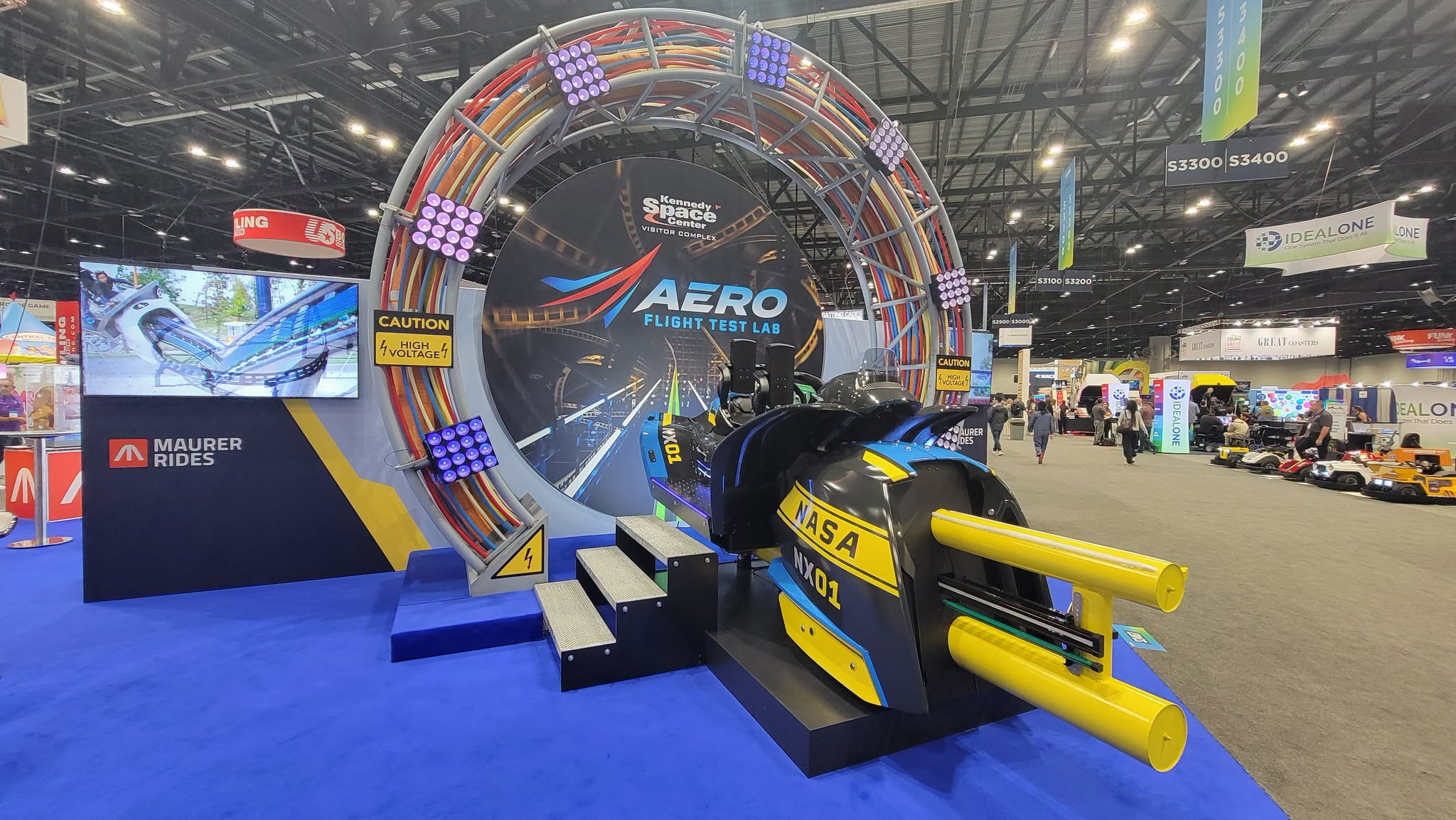
One of the challenges facing science museums and educational attractions is finding ways to communicate complex information without overwhelming younger audiences.
AERO Test Lab approaches that challenge through storytelling.
Instead of presenting aeronautical research exclusively through written explanations, the attraction places visitors inside a scenario where scientific knowledge has a practical purpose.
The mission provides context. The vehicle provides excitement. The simulated challenges introduce scientific principles that help explain what engineers investigate.
Whether the finished experience successfully balances those elements will become clear when it opens. Nevertheless, the concept represents an interesting approach to combining themed entertainment with education.
It also offers a reminder that immersive storytelling doesn't have to be limited to fictional characters or imaginary worlds.
The real achievements of scientists, engineers, test pilots, and astronauts provide extraordinary stories of their own.
For children growing up surrounded by fictional superheroes, discovering the accomplishments of real people who have devoted their careers to exploration and scientific discovery can offer a different kind of inspiration.
Inspiring the Next Generation of Explorers
Cabana's own career illustrates the possibilities that can emerge from an early fascination with aviation.
His journey ultimately took him beyond Earth's atmosphere and into one of the most significant international engineering projects in modern history.
Not every child visiting Kennedy Space Center will become an astronaut. Some may pursue careers in mechanical engineering, computer science, aviation maintenance, robotics, or other fields that contribute to scientific progress.
Others may simply leave with a greater appreciation for the ingenuity behind technologies they previously took for granted.
Both outcomes have educational value.
When Family Media News asked Cabana to extend an invitation to families across the United States and internationally, his response reflected his enthusiasm for sharing NASA's achievements with the public.
“I wanna invite everybody to come to the Kennedy Space Center Visitors Complex,” he said. “It is just an absolutely amazing experience.”
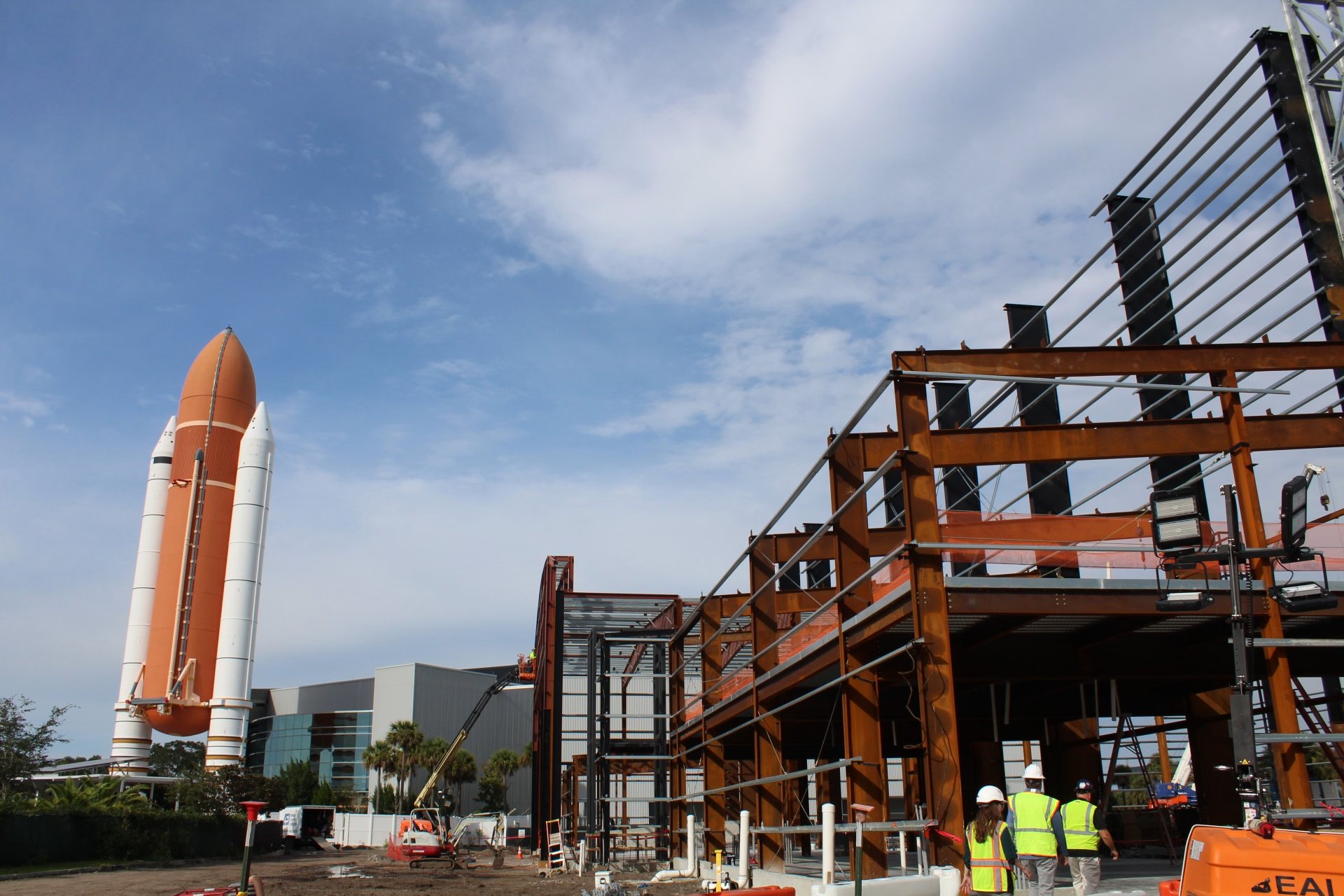
For families planning future visits, AERO Test Lab is currently under construction, with an anticipated opening in early 2028. An exact opening date and minimum rider height have not yet been announced.
Until then, Kennedy Space Center continues offering opportunities to explore America's space program, encounter astronauts, and discover the people and technologies behind decades of exploration.
Its newest attraction may eventually deliver something particularly worthwhile: a reminder that scientific discovery is not confined to distant planets or extraordinary missions.
Sometimes, it begins with a child's curiosity about how an airplane flies.
And sometimes, a roller coaster might be just the thing to help that curiosity take flight.
Family Media News conducted this exclusive interview with former NASA astronaut Bob Cabana during IAAPA Expo 2026 at the Orange County Convention Center in Orlando, Florida.
Editorial sources and verification
- Kennedy Space Center, Official AERO Test Lab announcement - FOX 35 Orlando, Attraction unveiling coverage - Visit Florida, Official Kennedy Space Center and Maurer Rides press release - [FMN original interview]
Topics: STEM · Family Travel & Experiences · Florida Attractions