

Opening FMN report
The article is loading.FMN Original · Family
When Can Parents Be Liable for Protest Damage in France and Italy?
FMN AUDIO
Listen to this article
Audio playback is not available in this browser.
Article audio is stopped.
Parents in France and Italy can face financial claims when their minor children damage property during a student protest. That does not mean every parent automatically owes money whenever a young person attends a demonstration or is present when disorder occurs. Liability depends on the applicable civil law, the child’s role, the family’s legal relationship and the evidence in the individual case.
Both countries already have civil code provisions that can make parents responsible for damage caused by minors. These rules concern compensation for harm, such as the cost of repairing a broken window or other damaged property. They are separate from any criminal penalty imposed on a person who committed an offense.
In Italy, Article 2048 of the Civil Code states that parents and guardians are liable for damage caused by the unlawful act of unemancipated minor children, or people under guardianship, who live with them. The provision also applies to foster parents.
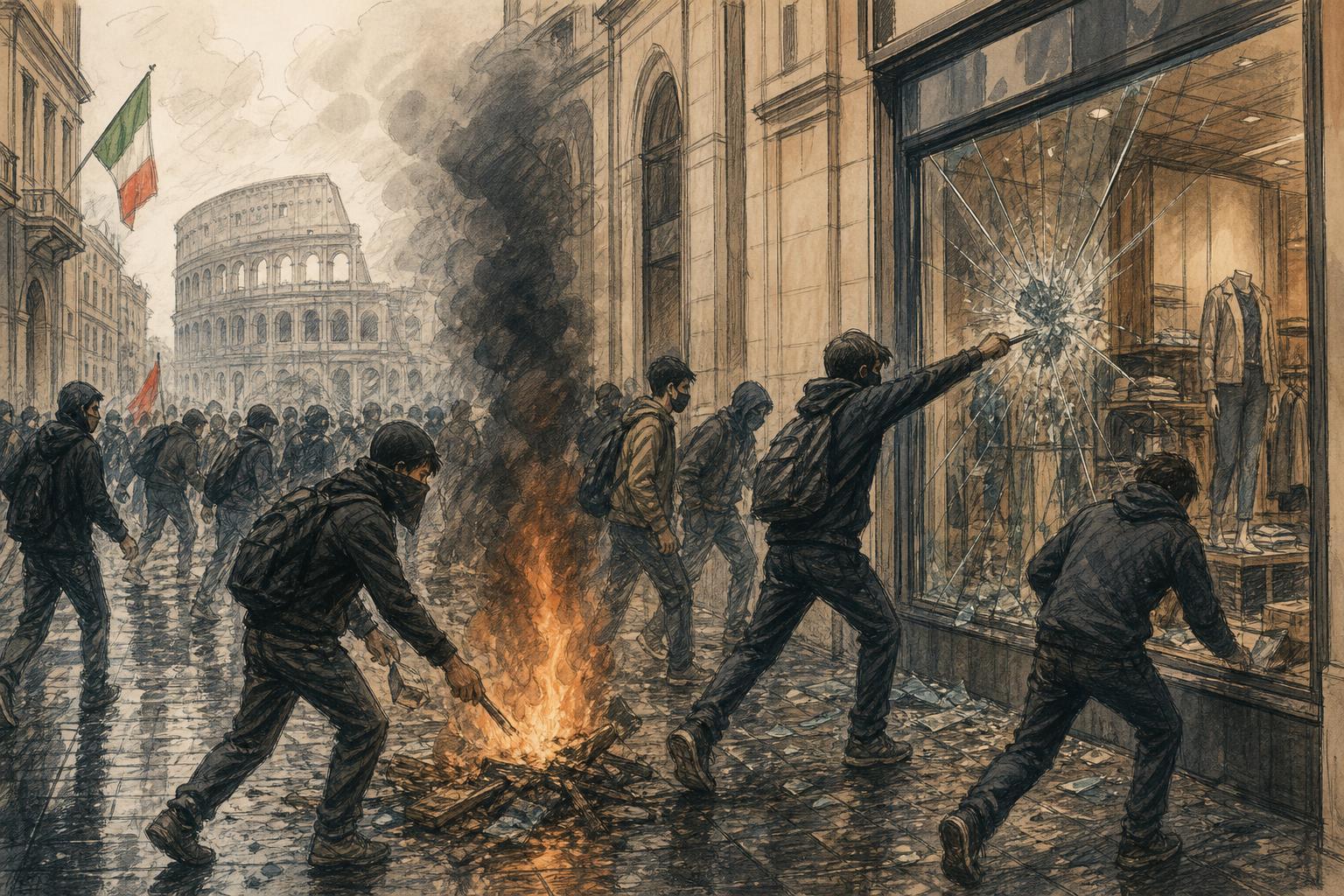
That language establishes several questions that may matter in a particular dispute. Authorities or a claimant would need to connect the damage to an unlawful act by the minor. The child’s status, living arrangements and the identity of the responsible parent, guardian or foster parent may also be relevant under the provision.
Italian authorities can enforce an established financial obligation through measures that include attachment of assets or wages. Such enforcement is not the same as assuming that every family connected to a protest is responsible. A claim must concern damage attributed under the applicable legal rules, and the result can depend on the facts and legal proceedings involved.
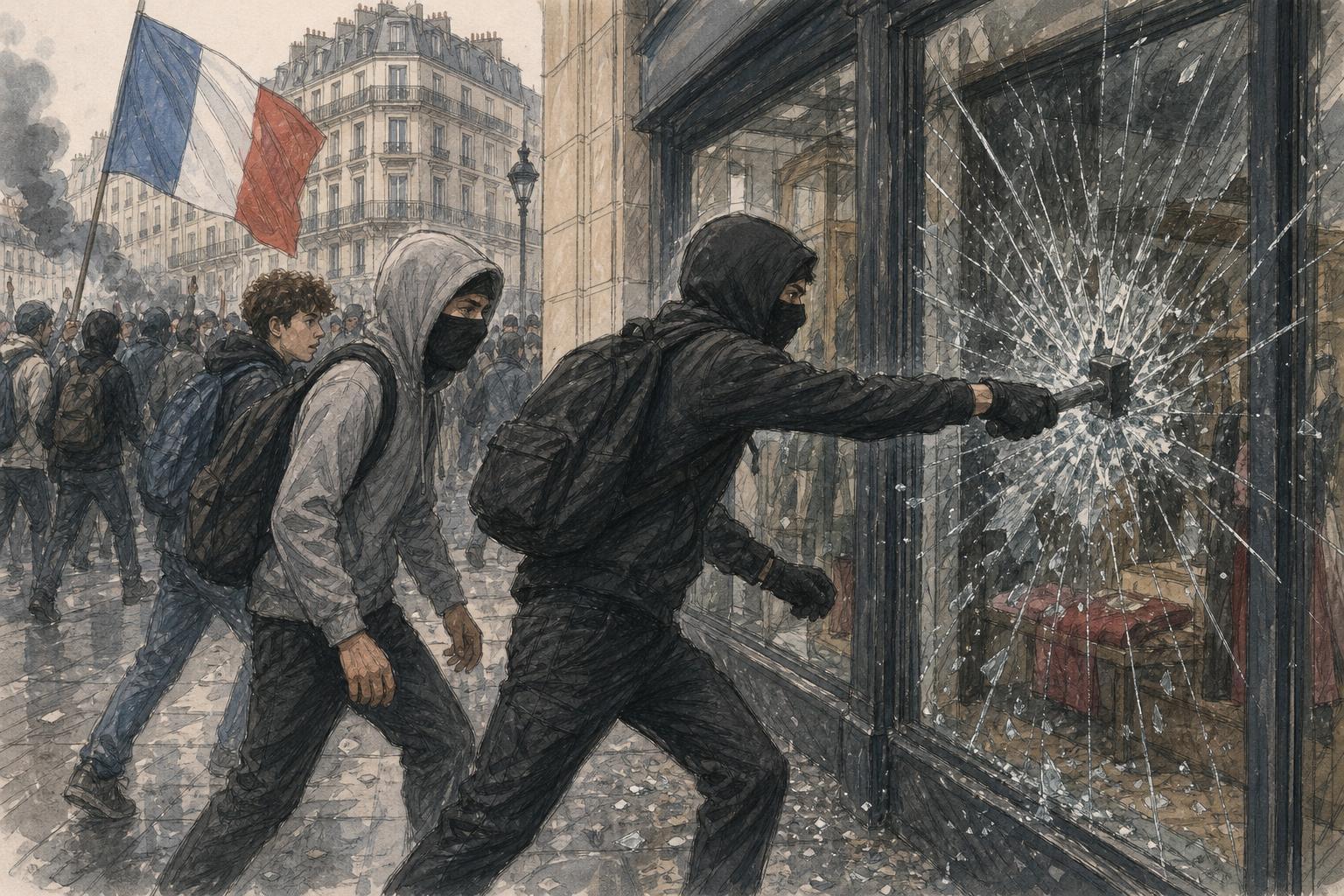
France takes a broadly similar approach through Article 1242 of the Civil Code. The French provision makes parents who hold parental authority jointly and severally liable for damage caused by their minor children. Joint and several liability can allow compensation to be pursued from parents who fall within the rule, rather than leaving the person whose property was damaged to seek payment only from the child.
French law also contains an important exception. According to the statutory language, parental liability does not apply in the same way when the child has been entrusted to a third party by an administrative or judicial decision. This makes formal placement arrangements potentially significant. Families should not assume that an informal absence from home or temporary supervision necessarily has the same legal effect as a placement ordered by an authority or court.
The French provision was amended to remove the earlier cohabitation requirement. As a result, whether a child was living with a particular parent is no longer necessarily decisive for civil liability. Parental authority and any qualifying administrative or judicial placement may be more important to the analysis.
Compensation in France can be pursued through civil proceedings. If insurance does not cover the loss, enforcement may include seizure of assets. Civil liability coverage is often connected to housing insurance, but whether an insurer will pay depends on the terms of the particular policy. Families should review their contracts rather than assume all protest-related damage is covered.
The central distinction for parents is between being at a protest and causing legally recognized damage. The civil code provisions described here address damage caused by a minor’s unlawful act. They do not establish that all parents of students in a crowd must pay for every loss that occurs nearby. Questions of who caused the damage, whether the conduct was unlawful and which adult falls within the relevant parental-liability rule remain important.
Families should also distinguish parental financial responsibility from a young person’s own legal exposure. A minor may face proceedings based on the minor’s conduct, while a parent may face a civil claim for compensation. Those are related but different issues. A parent’s potential duty to compensate a victim does not by itself establish that the parent personally vandalized property or committed the child’s alleged offense.
Public discussion in both countries has included proposals to strengthen responses to protest damage. Proposed legislation should not be treated as existing law before it has completed the required process and taken effect. The timing of an incident matters because courts and authorities apply the law in force under the circumstances of the case.
For families, the practical questions are specific: Was the child a minor? Is there evidence linking the child to the damage? Who held parental authority or guardianship? Did the child live with the responsible adult where that remains legally relevant? Had a French child been formally entrusted to a third party? Is there applicable insurance, and what exclusions or conditions does the policy contain?
Because the financial consequences can include claims against wages or property, parents facing an allegation should seek advice based on the governing law and the precise facts. The general rules create possible liability, but they do not predetermine the outcome of every protest-related case.